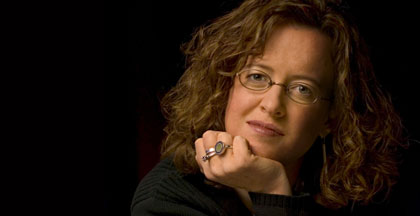
An anthropologist at Intel says women throughout the world are inventing surprising new ways of using technology to manage families, communities, sex, religion, careers, vacations and other aspects of daily life.
As a director of user experience at Intel, Bell has spent the last decade studying how people use technology in various cultures. She speaks frequently on behavior, practices, etiquette and attitudes surrounding technology, and this year Fast Company magazine named her one of the 100 most creative people in business. Intel and other technology companies invest in ethnographic research to ensure that diverse global needs, aspirations, trends and frames of reference are driving the development process.
In May, Bell summarized some of her research around the ways women use technology for a group of bloggers visiting Intel.
“Irrespective of where you live, if you are a woman, chances are that you are doing more than one job,” Bell said. “Your time is fragmented in complicated ways. One of the natural consequences of this is that your patience with things that don’t work is lower. In this sense, women become a gold standard for usability. If you can get it right for women, it’s going to be right for everyone. If you don’t aim at the beginning point of coming out of the box and just working and working flawlessly, every time, there are going to be a lot of women for whom that solution is never going to be a part of their lives. Not because they don’t understand technology … but because there are so many other constraints and pressures.”
Among Bell’s findings:
- A psychologist at a university in Seoul, Korea, clothes her Internet avatar in the same way she clothes herself, on a daily basis. Women in Korea place great value in personal networks, and want to present themselves visually on the Internet in a way that extends and reinforces reality.
- Many women in China have their mobile phones blessed annually by a Buddhist monk. Mobile phones have become a form of jewelry, and are usually kept close to the body, like an amulet. As objects, mobile phones carry symbolic qualities and function in social and spiritual ways that have nothing to do with signal strength or other technical measurements.
- A businesswoman in Singapore says personal technology resembles a nest of hungry baby birds who always want something. Bell says this woman exemplifies a worldwide trend to manage lives by managing personal technology, often by leaving it at the office or turning it off completely. People frequently choose vacation destinations based on the absence of ways to connect by Internet or mobile phone.
- Women in Korea use wireless devices to access the Internet more frequently than men. Bell believes this is because women frequently shift attention from one task to another, and task-shifting in fragmented, short units of time is easier with small wireless mobile devices than with personal computers.
- A Malaysian physician who runs a medical clinic uses mobile phones to manage her maid and the homework and bedtimes of her three children, on nights when she works at the clinic. Bell believes women use technology to balance work, children, and people in their lives.
- Research by Facebook suggests 64 percent of Facebook users are women, who are keenly interested in using the Internet for engagement and community building.
- Women make up the majority of the 75 to 80 percent of online Americans using the Internet for religious or spiritual purposes, including checking church Web sites and ecumenical dating. Millions of Catholics subscribe to daily papal prayers distributed as text messages on mobile phones, and Islamic prayer alert services use text messages to remind followers when to pray.
- Research indicates 100 percent of women lie on online dating sites, the same percentage as men. Women lie about weight, and men lie about height. One-third of visitors to adult-content Web sites in the US, UK and Australia are now women — a figure far higher than 10 years ago.
- Women use mobile phones throughout Africa to distribute text-based information about public health, safe sex, disasters and disease. Recently, Internet-based radio is playing this role.
- In Singapore and Malaysia, maids who can troubleshoot wireless networks in the home are extremely valuable, and some households send maids to Information Technology training seminars.
- In India, 80 percent of Internet cafes are owned by women, mostly because of microfinance initiatives such as the Grameen Bank.
- In the Middle East, only 4 percent of Internet users are women, because access often takes place in Internet cafes where women cannot participate. However, wireless devices are improving access.
Intel photograph of Genevieve Bell.
![]()